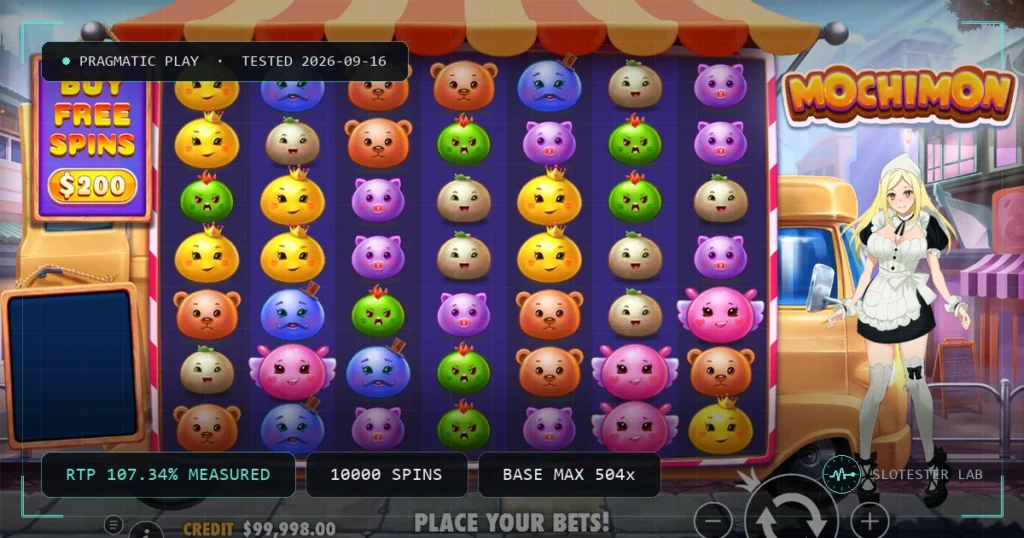
Pragmatic Play · 2023 · tested 2026-09-16
Mochimon
In Mochimon, a USD 280 cluster combined small cell multipliers during ordinary play; this demo review measures RTP alongside the free spins record.
Seven 2x positions supplied the same cluster, lifting USD 20 to USD 280. The ordinary round needed no free spins: the multiplier came from adding the participating cells.
measured over 10,000 spins · 50 buys
Is Mochimon worth playing?
quick answerUSD 21,467.10 came back from USD 20,000 wagered across ordinary paid rounds, making this run's RTP 107.3355%. The selected game profile states 96.50%. Separately, 50 bonus purchases cost USD 10,000 and returned USD 8,430.90; those tickets are excluded from the ordinary-series calculation.
Test card
10,000 spins · USD 2.00 bet · every request logged| Spins | 10,000 |
| Bet | USD 2.00 |
| RTP declared | 96.50% |
| RTP measured | 107.34% (approximate 95% CI 71.5–143.2) |
| Hit frequency | 34% · every 2.93 |
| Dead streak max / avg | 20 / 2.97 |
| Median hit | 0.75x |
| Max win (base game) | 504.0x · spin 7056 |
| Free spins, natural | 29 · every 344.8 spins · mean FS-only payout 120.3x stake |
| Balance start → end | 100,000 → 101,467 |
Play Mochimon demo
same math as real play · demo balance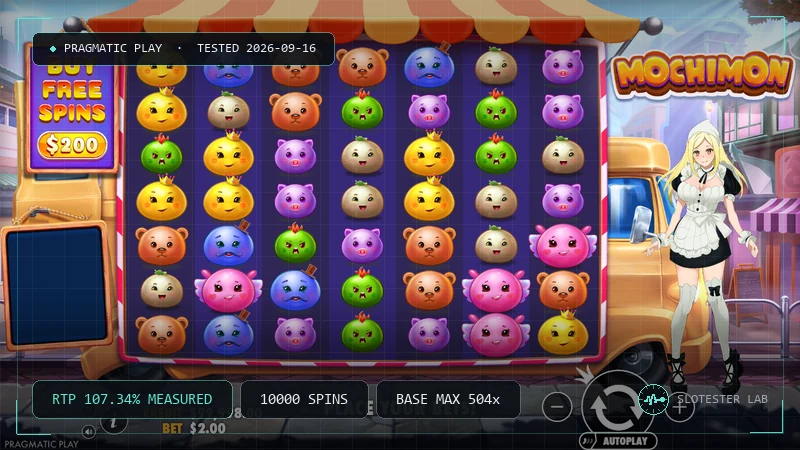
Bonus buy lab
50 buys × 100x · USD 200 eachmean 0.84x · median 0.42525× price (USD 85.05) · 34 of 50 below price · best 6.97x · worst 0.02x
| Spins per bonus (avg / min–max) | 10.8 / 10–22 |
| Retriggered | 6% |
| Bonuses that paid nothing | 0% |
Extensions occurred in 3 natural features and 3 purchased features. Natural round 9903 added 12 spins and then 10, taking its initial allocation from 10 to 32.
- Spent
- USD 10,00050 × USD 200
- Returned
- USD 8,430.9084.31% · approximate 95% CI 53–116%
- Net
- −USD 1,569.10−7.8 buys
- Break-even or better
- 16 / 5032%
- Paid 2× price or more
- 7 / 5014%
- Price in base spins
- 100natural trigger every ~345 spins
One ticket equals 100 ordinary stakes. Natural bonuses occurred once per 345 paid rounds in this sample. Stakes multiplied by this interval measure gross wagering, not the net cost of obtaining a bonus. Purchase returns above include the complete purchased round and are divided by the ticket price.
Risk profile
how much bankroll this run needed| 50 bets | bust at spin 119 |
| 100 bets | bust at spin 205 |
| 200 bets | bust at spin 645 |
One run, one bet size. A different session can bust earlier or never; treat this as a measured example, not a rule.
How it plays
7 rules screens from the game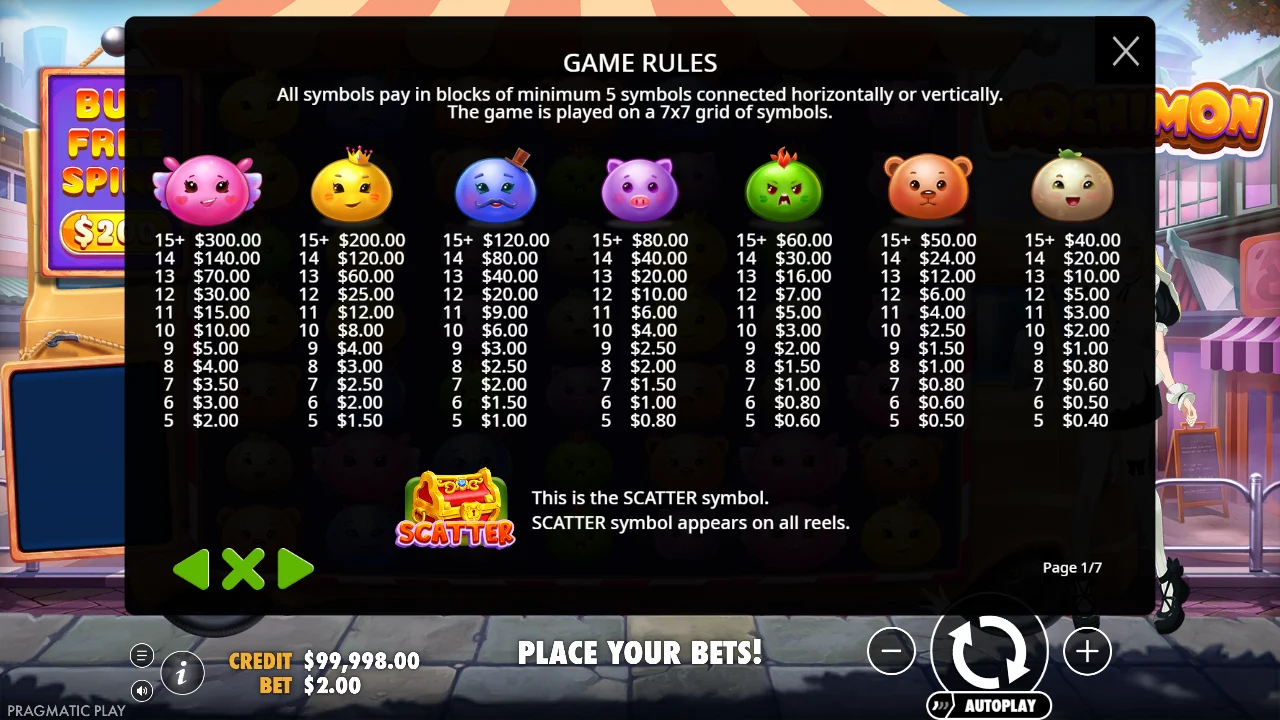
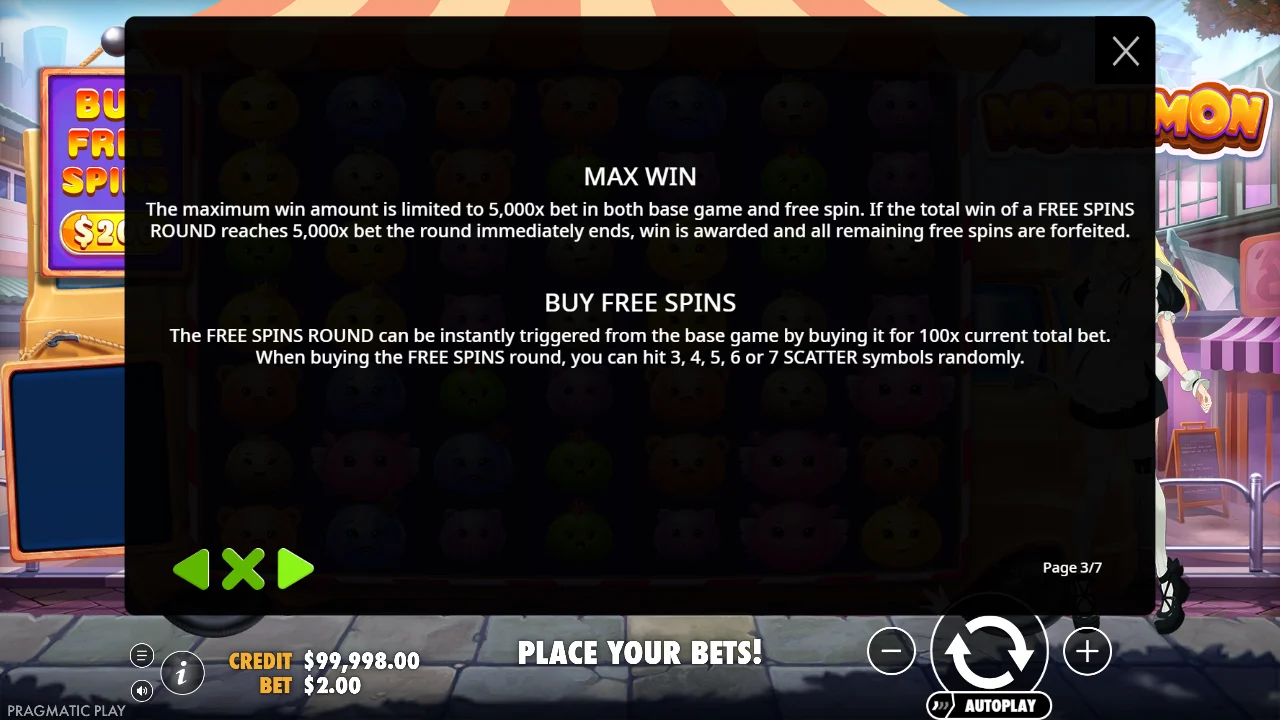
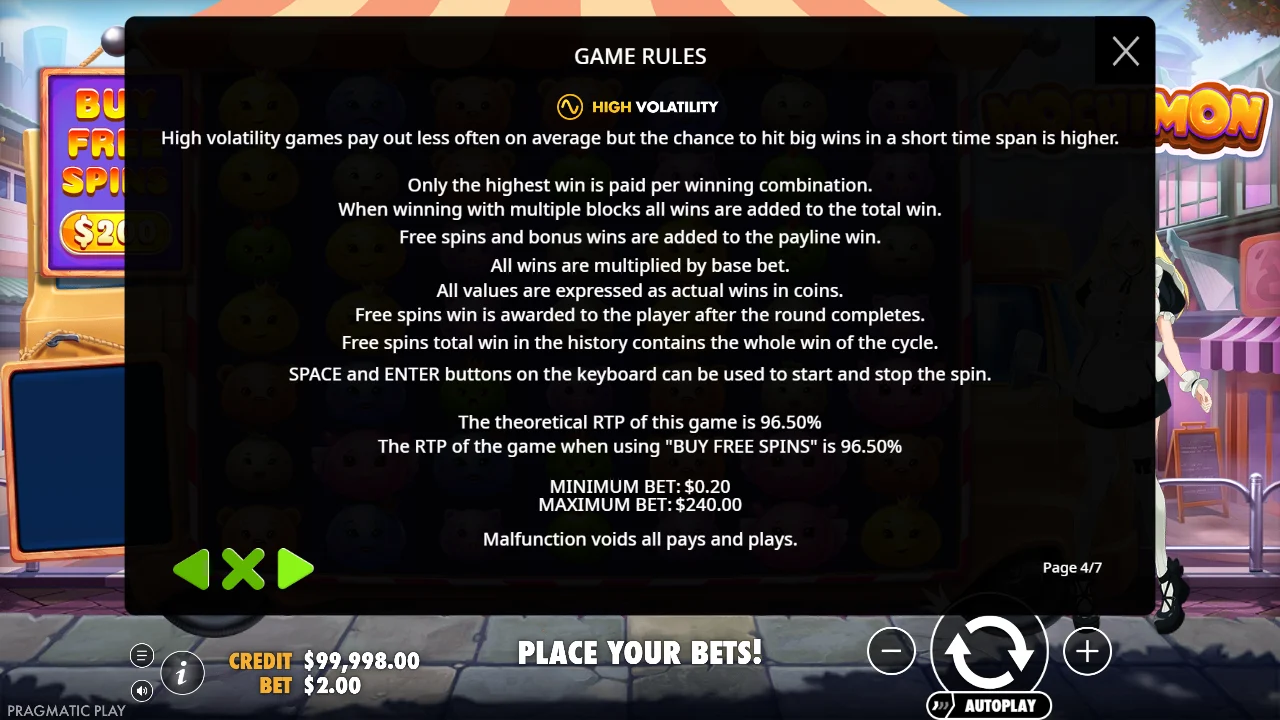
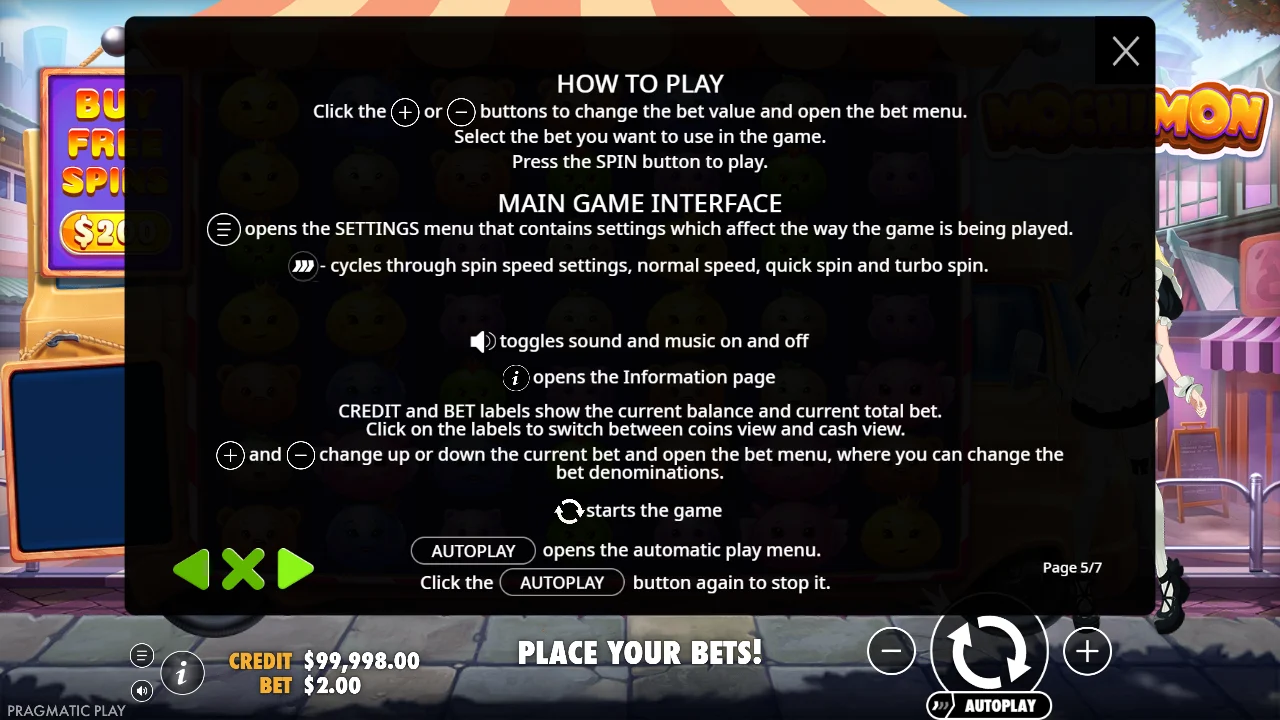
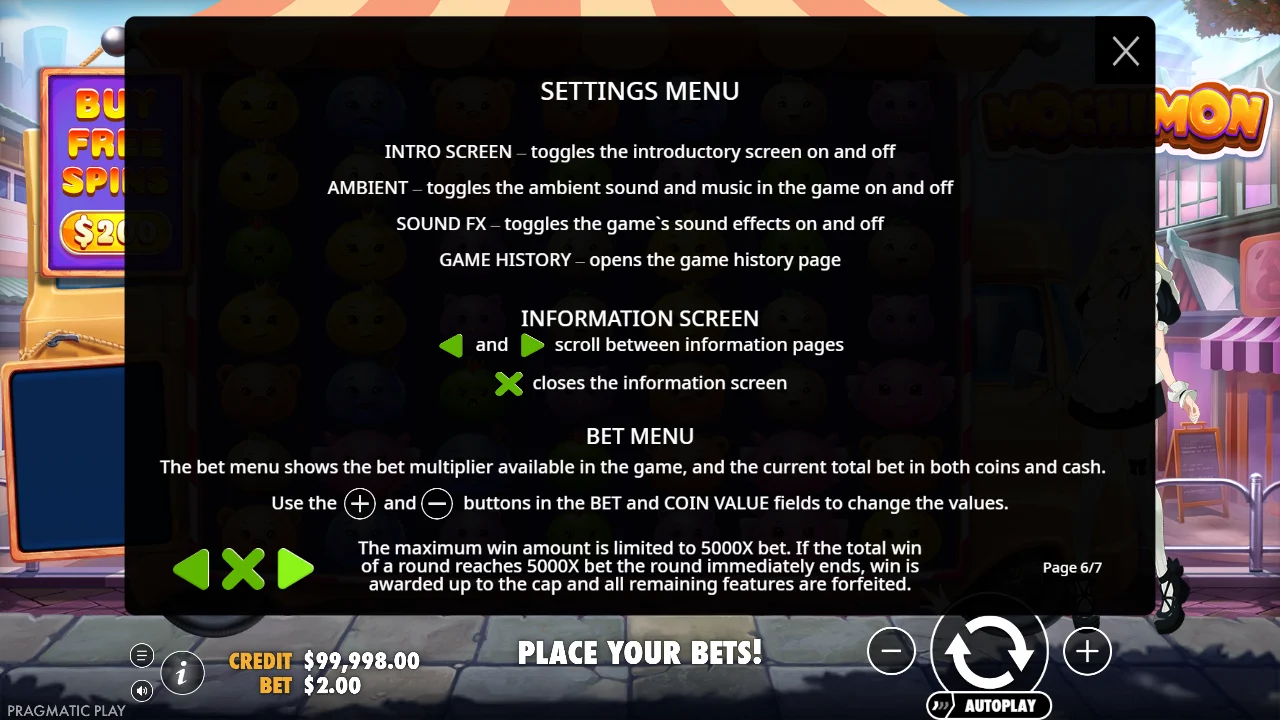
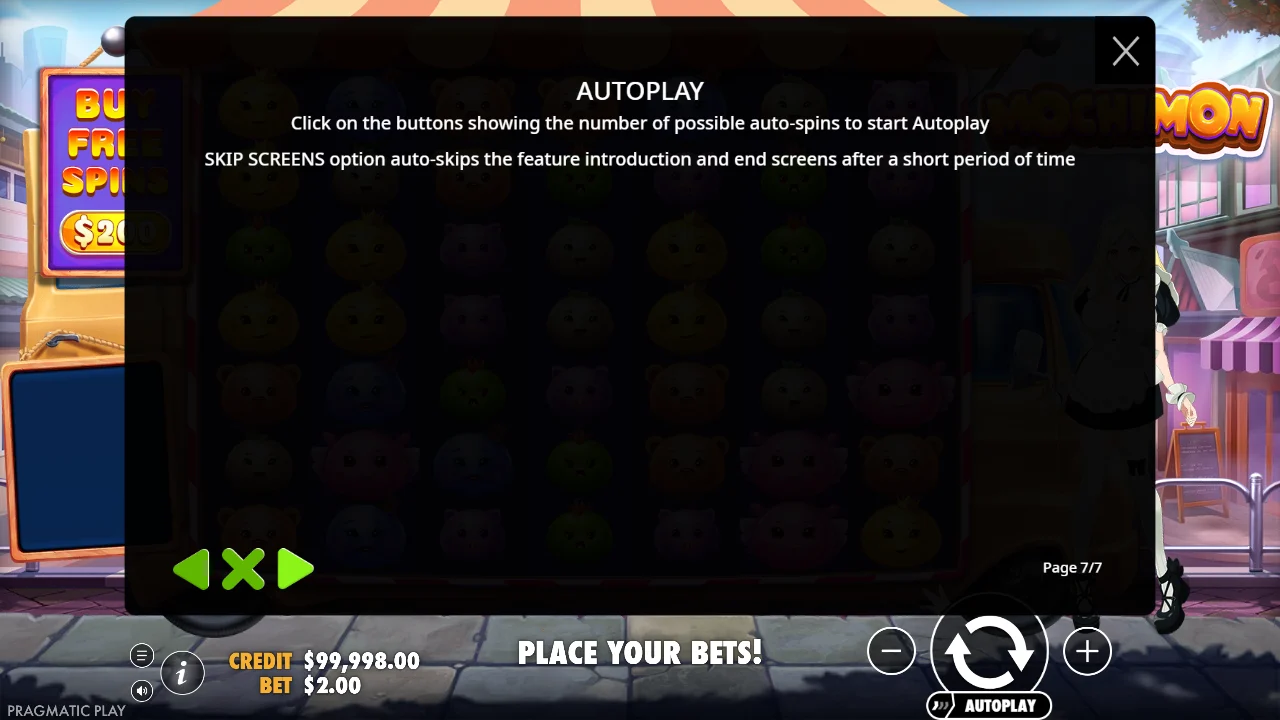
A cluster in Mochimon is a connected group of matching monsters on the 7x7 board. At least 5 must touch along their sides; diagonal contact alone does not join a group. A paid group disappears, the board refills and another cluster can pay within the same round.
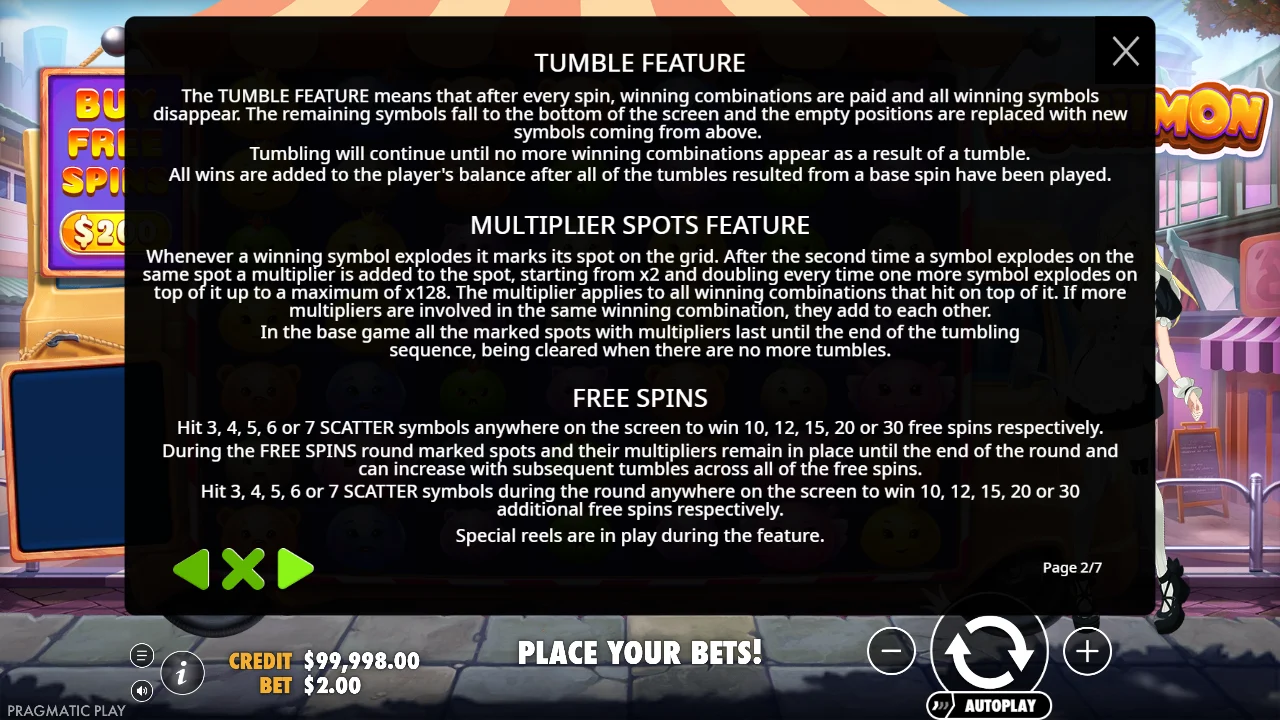
Winning positions acquire marks before they acquire multipliers. A second removal at a marked position creates a 2x cell for later clusters; further removals double that value until 128x. When a cluster crosses several multiplied positions, their values are summed to obtain its payout factor. Ordinary rounds clear this history after the tumble sequence ends.
The entry schedule pairs 3 scatters with 10 spins, 4 with 12, 5 with 15, 6 with 20 and 7 with 30. The same scatter schedule supplies extra spins inside the bonus. Marks and multipliers then carry across the feature's spins, so a later cluster can use positions prepared much earlier.
A purchased trigger is priced at 100x the ordinary stake, or USD 200 at the tested USD 2 setting. The purchased trigger can contain different scatter counts rather than fixing every bonus to the shortest length. A round cannot pay beyond 5,000x the stake; reaching the cap settles it and cancels any unfinished features.
High volatility and a 96.50% theoretical RTP apply to both entry routes in the recorded build. Its normal stake selector spans USD 0.20 to USD 240.00. The on-page demo and recorded bonus use USD 2, while the review's statistical series and browser media are separate sessions.
 Cluster pays
 Cascading reels
 Multiplier
 Free spins
 Retrigger
 Scatter symbol
 Bonus buy
Bet range USD 0.20 – 240 per spin · payouts read from the game's paytable at bet USD 2.00
Gallery
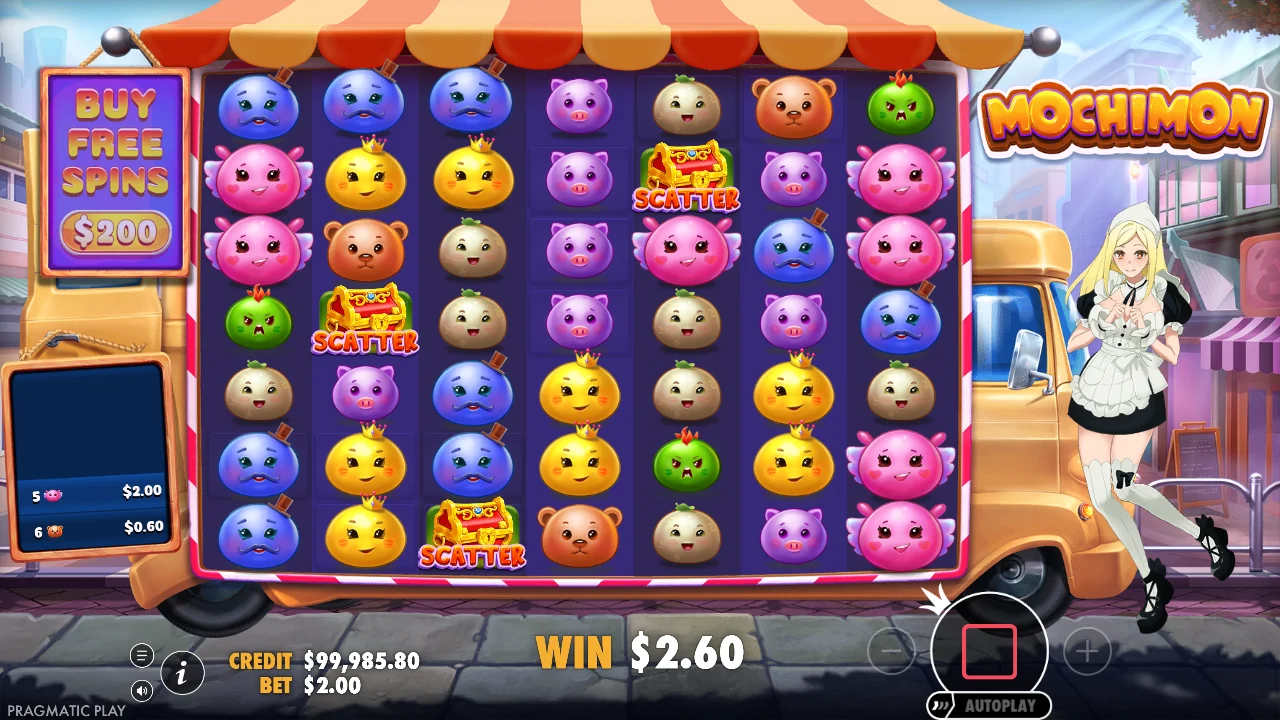
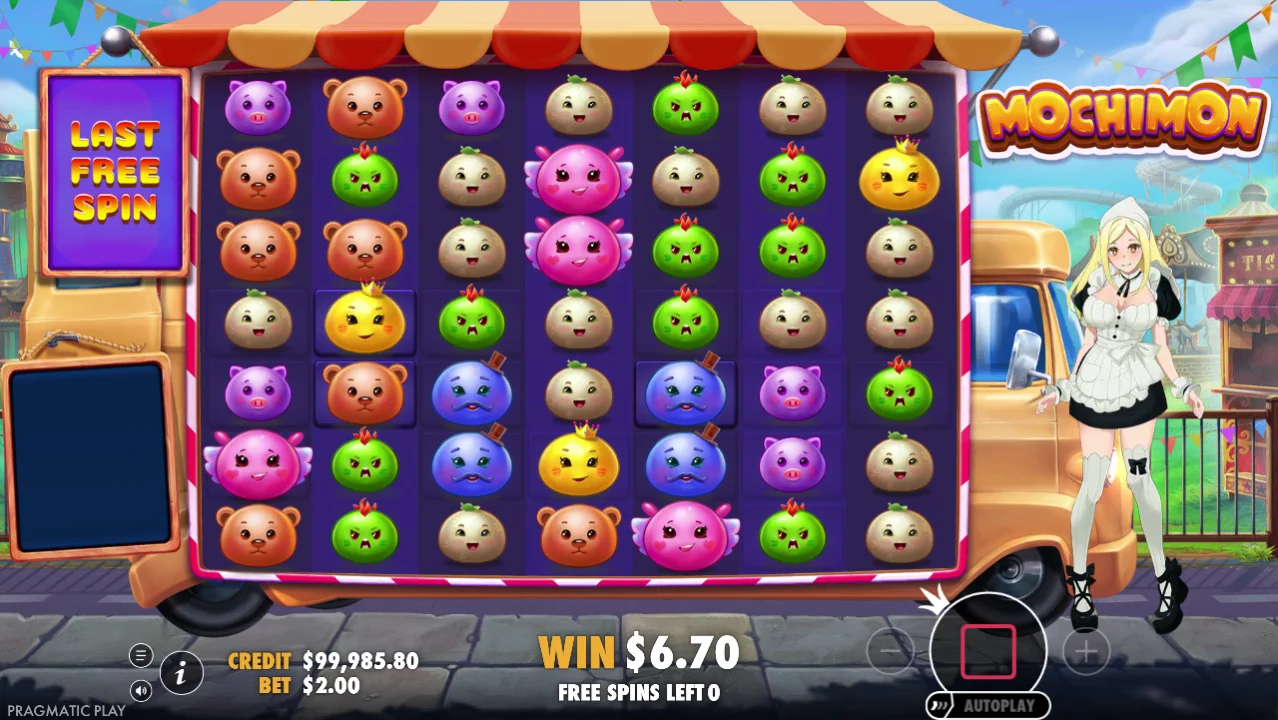
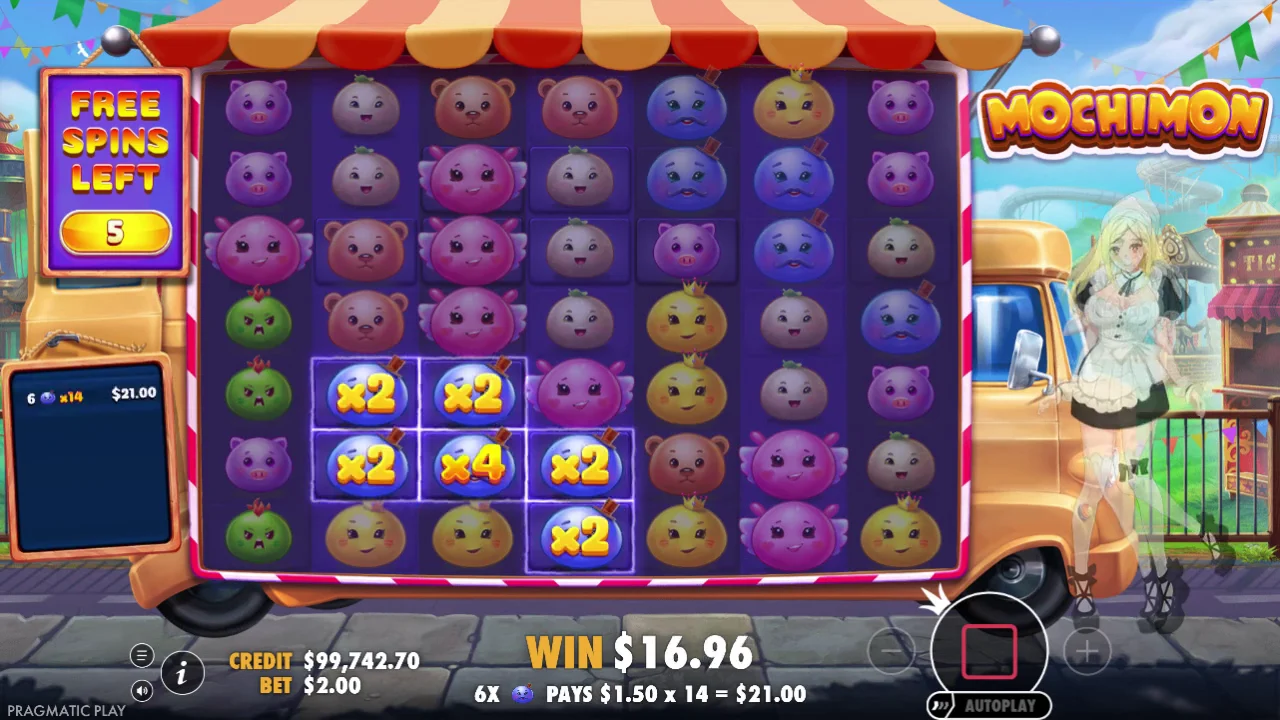
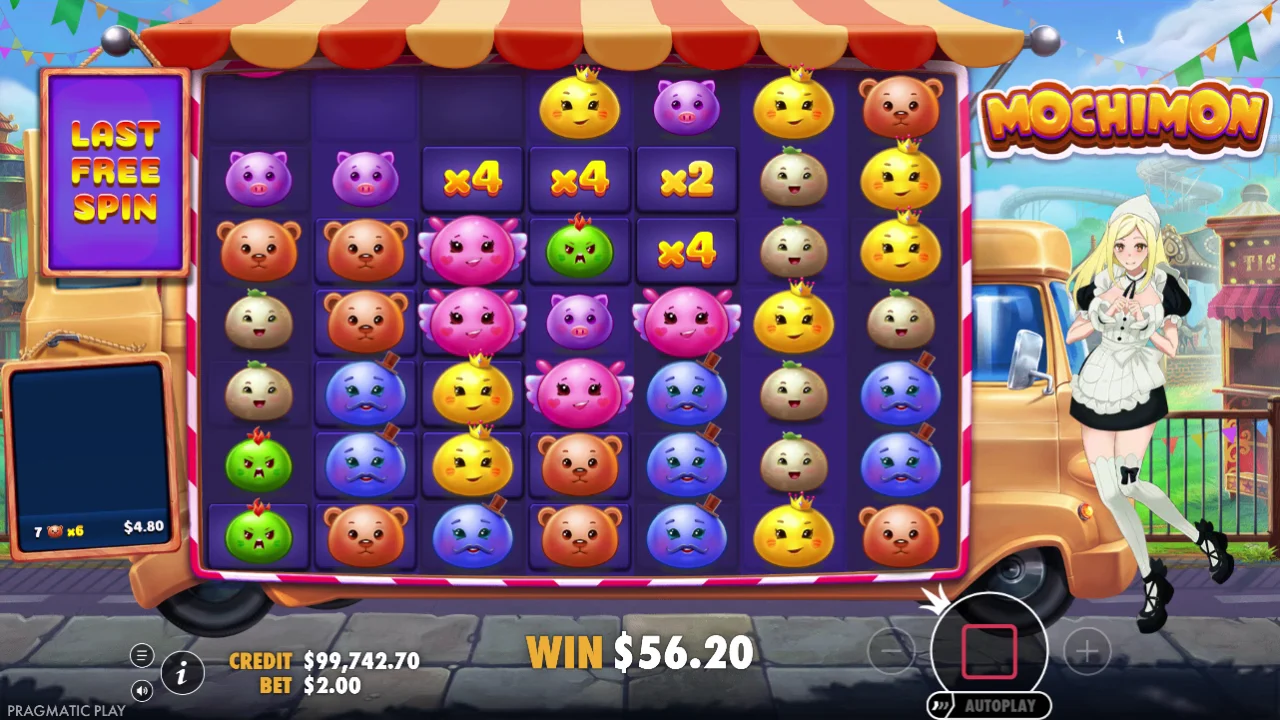
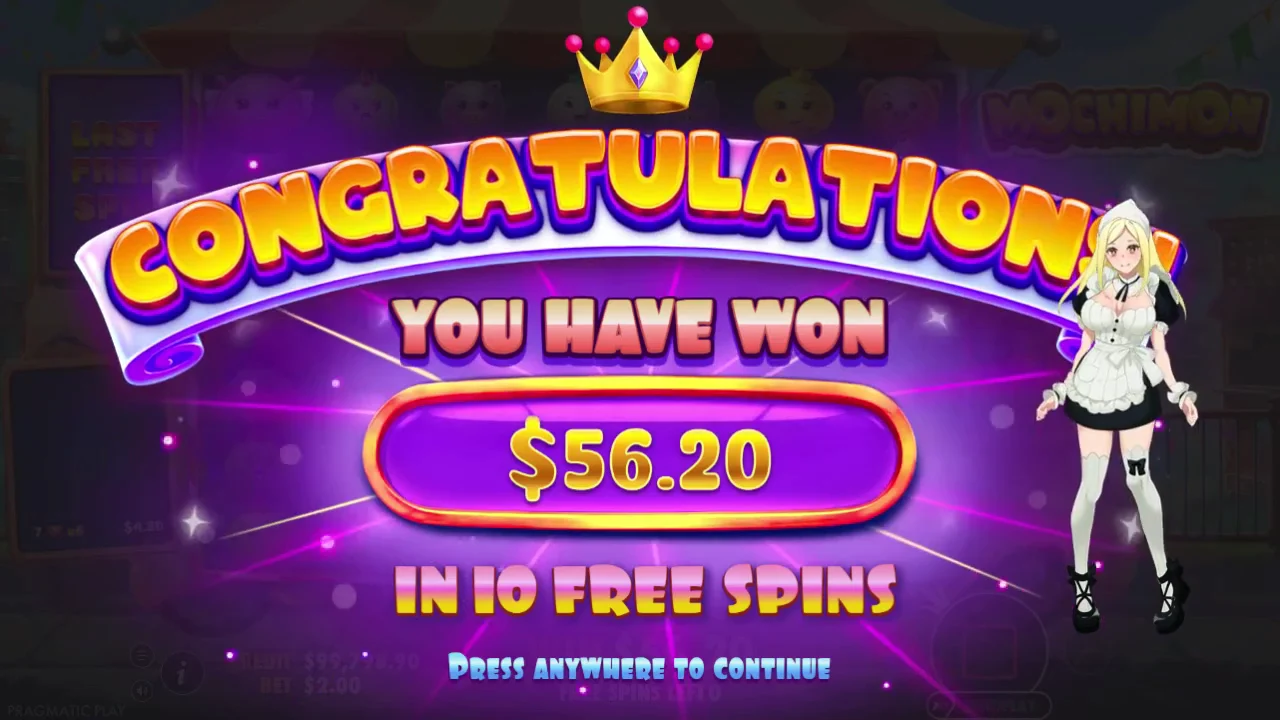
14 frames from the test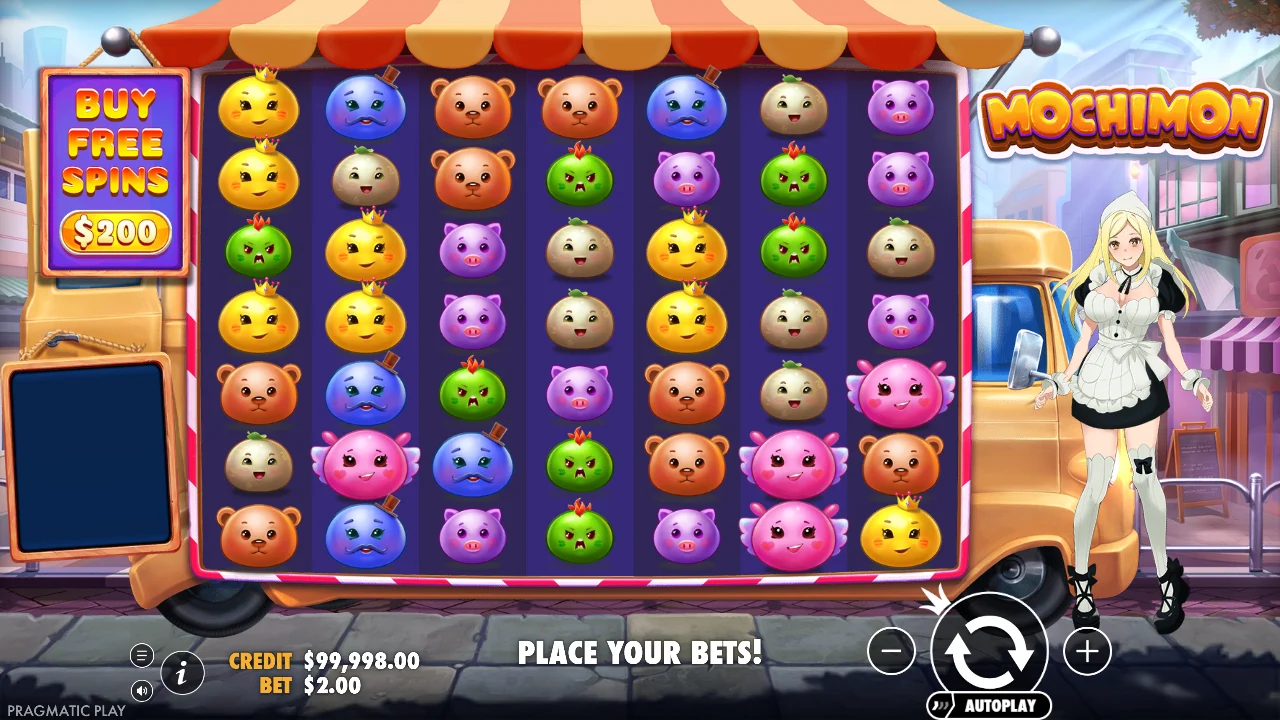
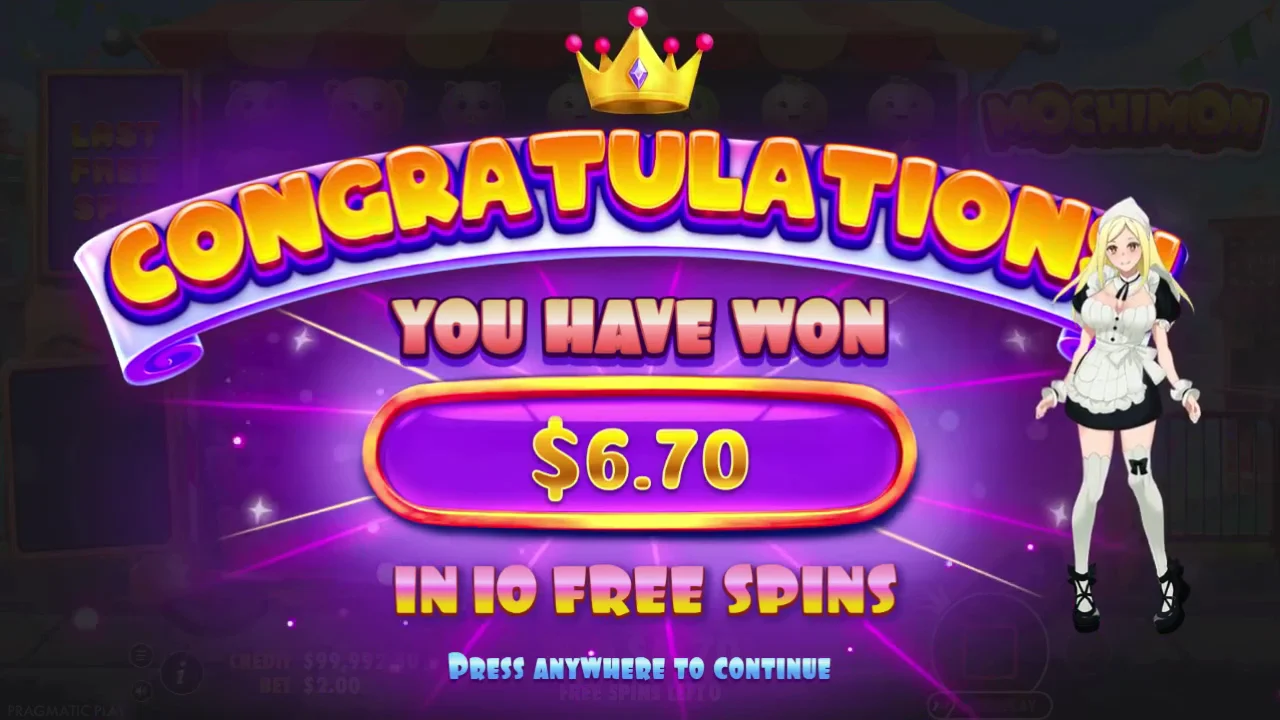
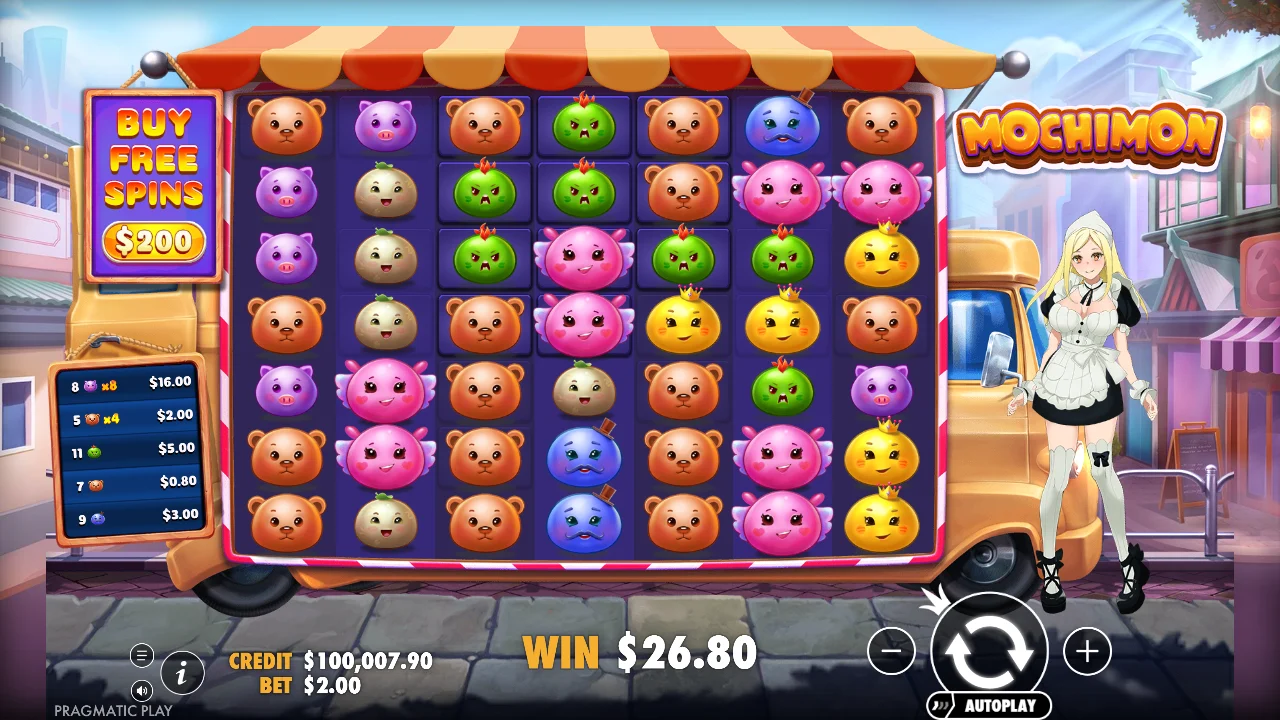
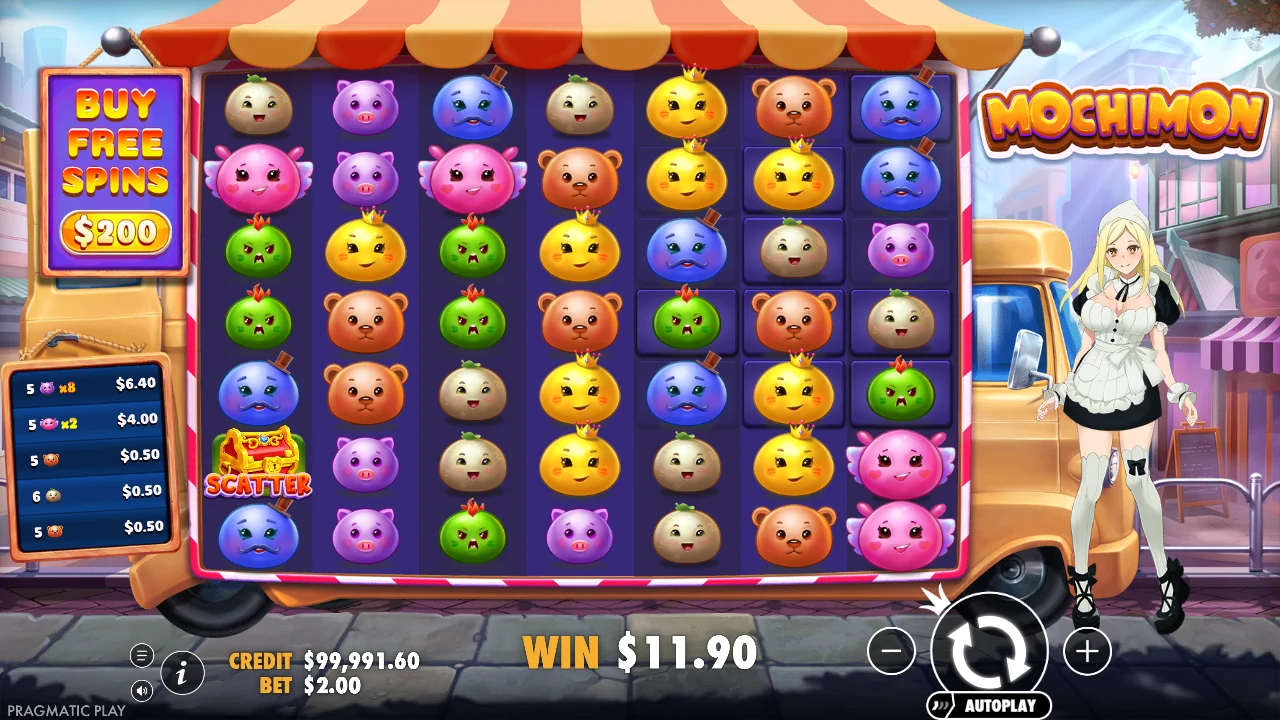
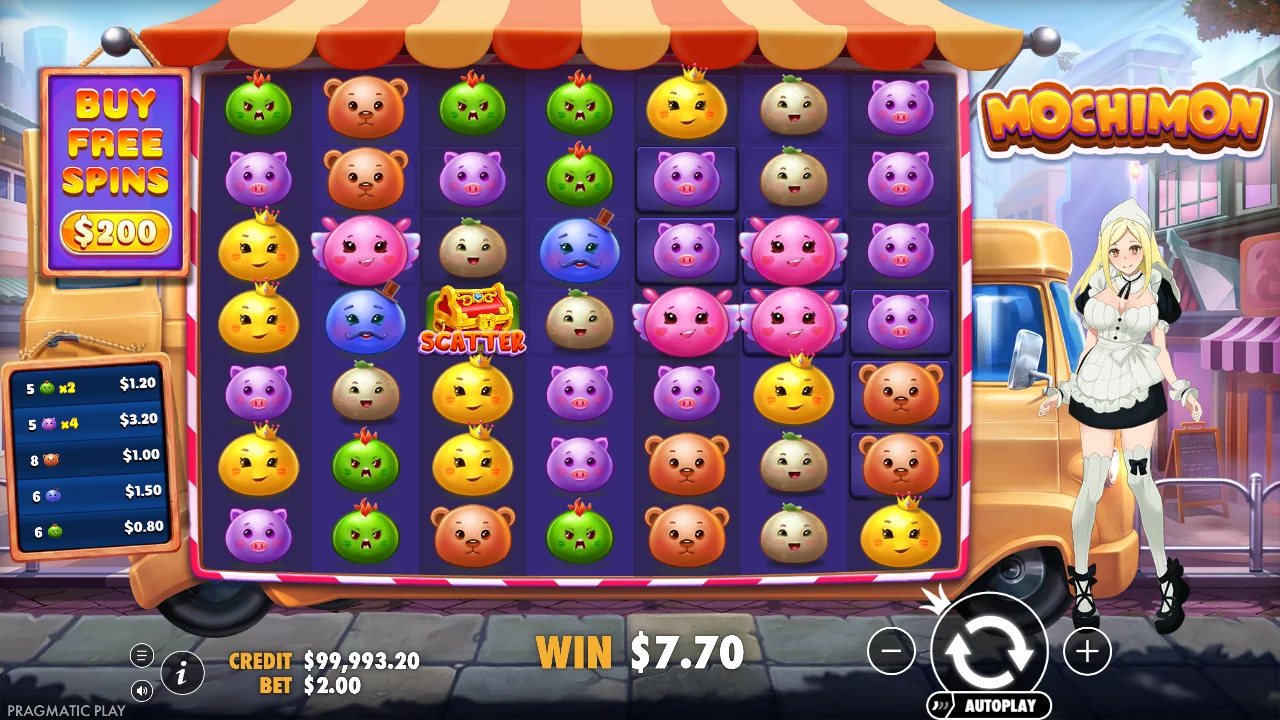
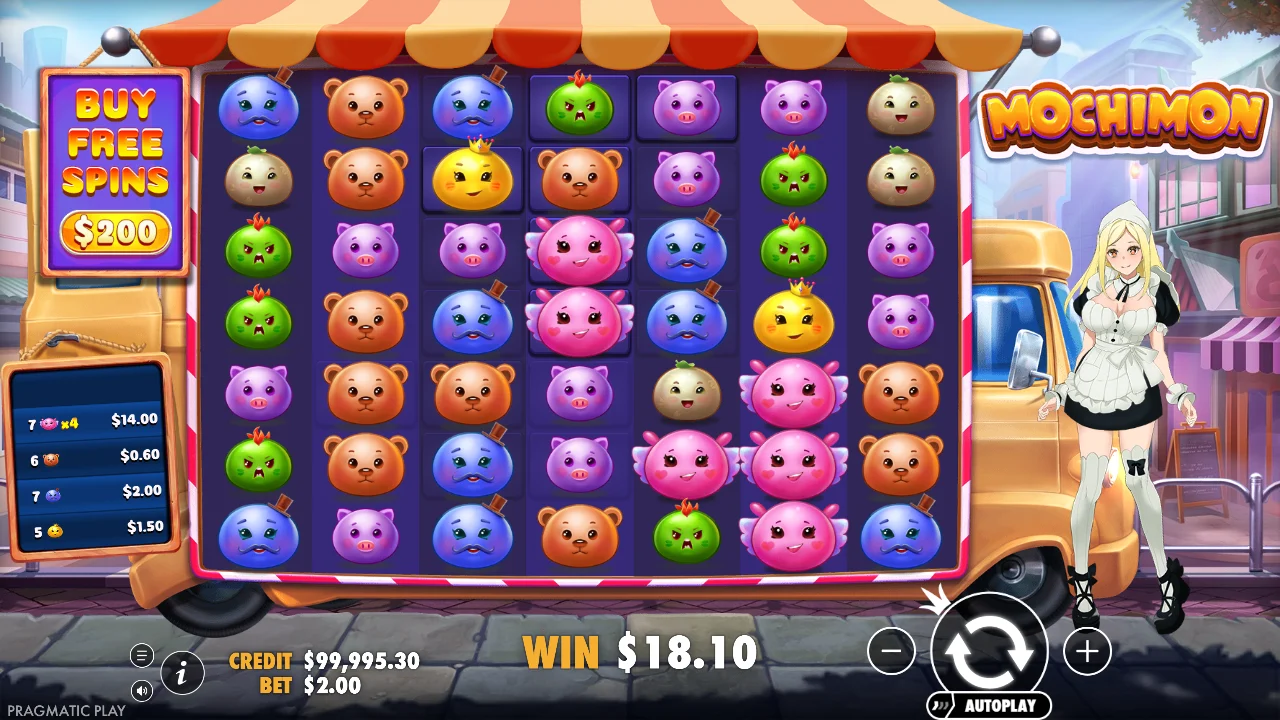
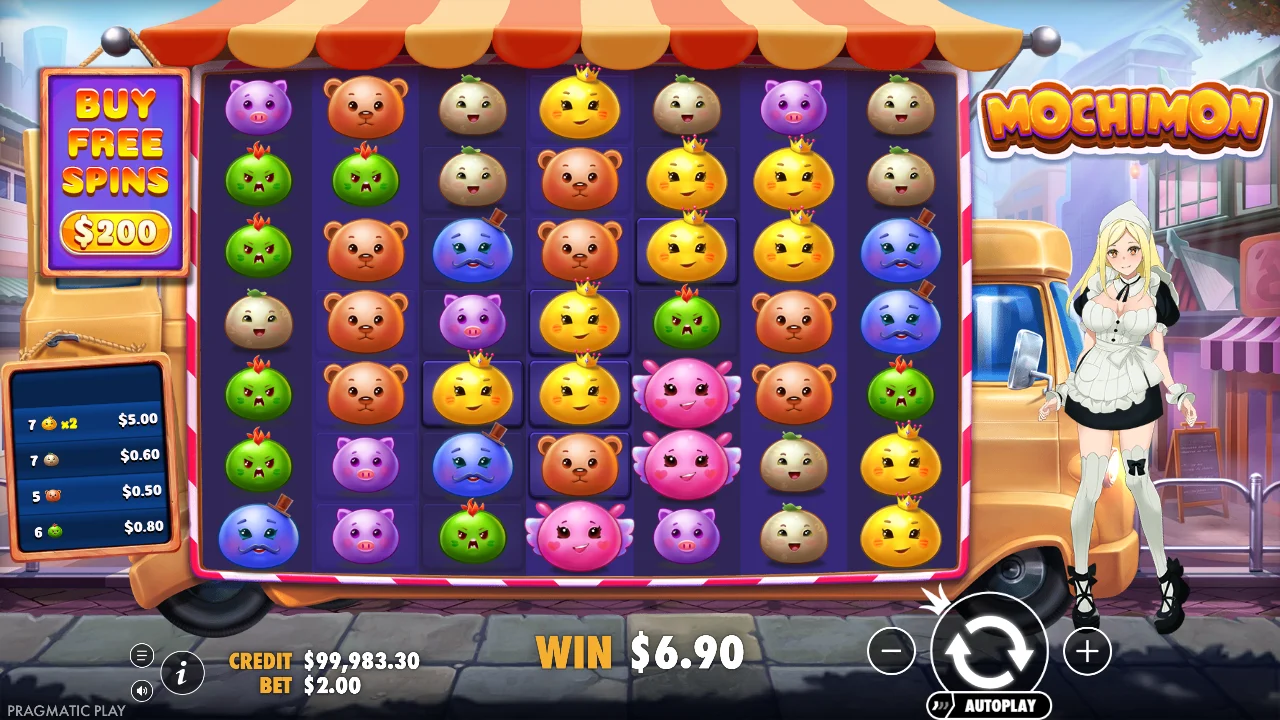
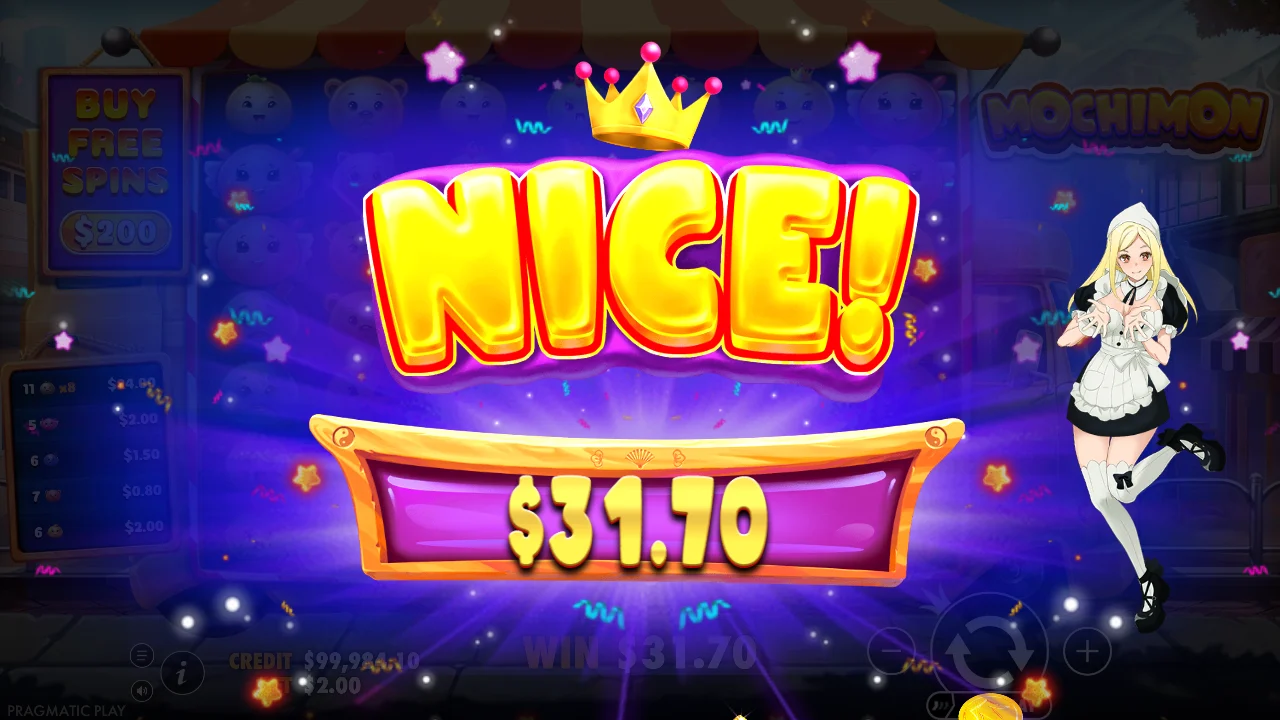
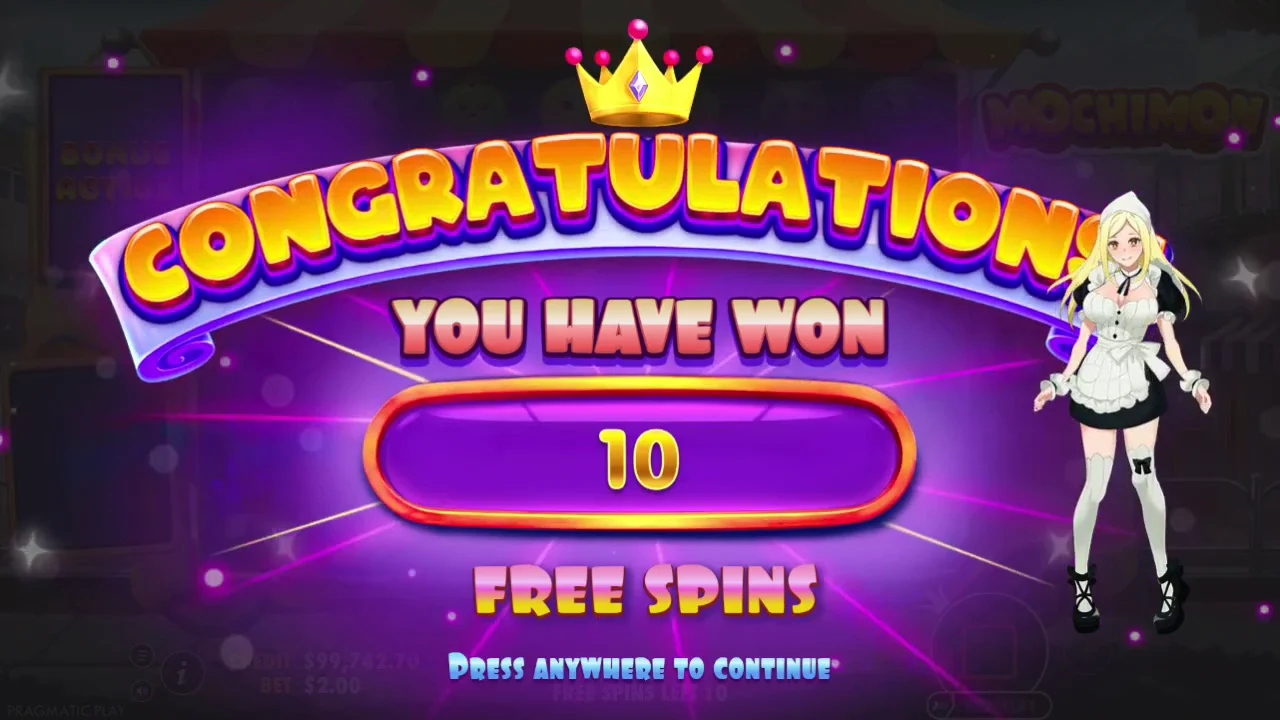
Verdict
A wide cluster can make small cells matterRound 1319 joined 12 blue monsters into one cluster. Its unmultiplied award was USD 20, but 7 participating positions each carried 2x, giving a combined 14x and a USD 280 cluster payment. Earlier clusters added USD 6.20, so the complete ordinary round returned USD 286.20. None of those individual cells needed a large displayed multiplier.
Purchases exposed a different part of the distribution: the median ticket returned USD 85.05 against its USD 200 cost. The mean was 0.84309x the ticket price, with 34 of 50 returns below that price; purchase 1 was the strongest at USD 1,394.60. A small positive bonus result and a recovered purchase cost are different outcomes.
Near the end of the ordinary series, a feature in round 9903 grew from 10 to 32 spins and paid USD 3,273.40. That feature reached 128x positions, but the earlier USD 280 cluster demonstrates another source of uplift: several low-value multipliers participating together in a sufficiently wide winning group.
- The board shows which positions have matured into multipliers, with individual values capped at 128x.
- Several modest cells can combine: seven 2x positions produced the audited 14x cluster factor.
- Both natural and purchased entry can start above 10 free spins; the purchase sample included 5 starts with 12.
- A first mark pays no multiplier; the position needs a second winning removal to establish 2x.
- Most sampled tickets did not recover their cost: 34 purchases finished below USD 200.
- Ordinary play included a run of 20 consecutive rounds with no payout.
- Only the cells under a winning cluster contribute: the 12-symbol blue group in round 1319 used 7 multiplied positions.
- Outside triggered features, round 7056 led the ordinary results with a USD 1,008 return.
- Bonus-only payments from natural entries totalled USD 6,975.70; trigger-round clusters are counted separately.
- A gap of 1,466 paid rounds separated the natural entries at 6430 and 7897.
Method & data
open data · closed rig10000 ordinary paid rounds, including naturally triggered features, at a fixed USD 2.0 bet; 50 bonus buys at 200.0 each (100.0x) on the official Pragmatic Play demo server (jurisdiction 99, RTP profile 96.5%); every request and response logged; test run 2026-09-16.
The test rig recorded every round on the official demo server. Screenshots and video were captured in a separate browser session and are not part of the statistical samples. This release has completed automated data, content and page checks; human editorial review is pending. How we test →
| 2026-09-16 | 10,000 spins · RTP 107.3% |
FAQ
4 questions · answered from the logDo Mochimon multipliers add together or multiply each other?
They add when they belong to the same winning cluster. In ordinary round 1319, seven 2x cells supplied a 14x factor to a USD 20 blue-monster cluster, paying USD 280. Only multiplier positions belonging to that blue cluster contributed.
Do marked Mochimon cells survive the next spin?
During ordinary play, marks and multipliers expire when the current tumble sequence finishes. Inside free spins they persist through the feature. The bonus in round 9903 lasted 32 spins after two extensions, allowing some positions to reach the 128x cell ceiling.
Were the USD 200 Mochimon purchases profitable?
Total purchase returns were USD 1,569.10 short of the USD 10,000 spent. Across the 50 tickets, the median return was USD 85.05 and the average was 0.84309x the USD 200 price. The best paid USD 1,394.60, while 34 tickets returned less than their cost. These are measured demo outcomes, not a forecast for another purchase.
Why did Mochimon return more than its stated RTP in this test?
The 96.50% setting is a long-run theoretical figure; the recorded 107.3355% belongs to this finite sample of 10,000 ordinary paid rounds. A single late bonus, round 9903, supplied USD 3,273.40 to that total. The separate purchased-feature series returned 84.309% of its ticket spend.
Also tested
4 more slots on the same rig-
 Wild Beach Party
Pragmatic Play · 2026-09-16 · 10,000 spins
RTP
96.5 → 144.9%
hit40%
max3,013x
buy1.06x
Wild Beach Party
Pragmatic Play · 2026-09-16 · 10,000 spins
RTP
96.5 → 144.9%
hit40%
max3,013x
buy1.06x
-
 Wisdom of Athena 1000
Pragmatic Play · 2026-09-15 · 10,000 spins
RTP
96.0 → 98.4%
hit27%
max248x
buy0.78x
Wisdom of Athena 1000
Pragmatic Play · 2026-09-15 · 10,000 spins
RTP
96.0 → 98.4%
hit27%
max248x
buy0.78x
-
 Big Bass Bonanza Megaways
Pragmatic Play · 2026-09-11 · 10,000 spins
RTP
96.7 → 90.2%
hit15%
max85x
buy—
Big Bass Bonanza Megaways
Pragmatic Play · 2026-09-11 · 10,000 spins
RTP
96.7 → 90.2%
hit15%
max85x
buy—
-
 Fire Strike 2
Pragmatic Play · 2026-09-07 · 10,000 spins
RTP
96.5 → 82.6%
hit18%
max150x
buy—
Fire Strike 2
Pragmatic Play · 2026-09-07 · 10,000 spins
RTP
96.5 → 82.6%
hit18%
max150x
buy—
Field notes
0 notes